
Monday, August 4th, 2025
Dr. Michael J. Wright
Dragonfly Entry, Descent and Lander Release: A Risk Management Perspective
 Bio: Michael Wright received his PhD in Aerospace Engineering from the University of Minnesota in 1997 and has worked at NASA Ames Research Center for twenty-six years, specializing in Entry, Descent and Landing systems and technologies, aerothermodynamics, and thermal protection systems. He is the primary developer of the aerothermodynamics code “DPLR”, 2007 NASA software of the year, and has supported EDL for many flight missions, including the Shuttle Orbiter, Stardust, Phoenix, and Huygens, Orion, and MSL. Michael is currently the acting lead of the Agency EDL System Capability Leadership Team and is the EDL Phase Lead for the Dragonfly Mission to Titan. Dr. Wright is an Associate Fellow of the AIAA and the recipient of the 2023 AIAA Thermophysics Award. Michael has co-authored more than 90 publications in the field, winning the AIAA Best Thermophysics paper award twice.
Abstract: Dragonfly is the fourth NASA New Frontiers mission and will send an MMRTG-powered rotorcraft lander to the surface of Titan to study the composition of a wide variety of surface sites and complete the first comprehensive in situ study of Titan’s chemical diversity and complexity. The spacecraft will launch in 2028 and arrive at Titan in 2034. This presentation will provide an overview of the concept of operations for the Entry, Descent and Lander Release phase that is designed to ensure the safe delivery of this unique “relocatable lander” to Titan, with an emphasis on some of the key technical challenges that the team has addressed during development, through the lens of Risk Management.
Tuesday, August 5th, 2025
Dr. Ethiraj Venkatapathy
Innovating NASA Entry Systems: Addressing Needs and Exploring the Future
 Bio: Ethiraj Venkatapathy, known as “Raj,” has served as NASA Senior Technologist for Entry System Technologies for the past eight years. He also holds the position of Chief Technologist within the Entry Systems and Technology Division at NASA Ames, a role he has fulfilled for over 23 years. Currently, his work focuses on advancing entry systems and technologies for the commercial space industry, developing thermal protection systems (TPS) for robotic in-situ science missions—including aerocapture—and mentoring the next generation of technologists. Raj’s contributions have been widely recognized through numerous prestigious awards. In 2024, he received the Presidential Rank Award. In 2022, he was honored with the IPPW’s Al Seiff Award. He is a two-time recipient of NASA’s Outstanding Leadership Medal (2007, 2010) and has been awarded the Exceptional Technology Achievement Medal (2012), the “NASA Game Changer of the Year” Award (2015), and the “STMD Leadership” Award (2015). These accolades highlight his pivotal role in advancing revolutionary technologies for NASA and the nation.
Abstract: Numerous commercial space companies are venturing into reentry missions from Low Earth Orbit (LEO). However, their lack of in-house capabilities and expertise in entry systems presents significant challenges. These companies are faced with two main options: investing time and resources to develop their own expertise or using resources to leverage existing outside capabilities through partnerships. This keynote will propose pathways for NASA to realign its focus, strengthen its capabilities, and prepare its workforce to meet the demands of the future. By fostering collaboration with commercial companies, NASA not only plays a pivotal role in expanding the space economy but also helps maintain U.S. leadership in space exploration. Together, NASA and its partners stand poised to redefine what is possible, unlocking the mysteries of the cosmos and inspiring generations to come.
Wednesday, August 6th, 2025
Dr. Rupak Biswas
Latest Exploration Technologies @ NASA Ames
 Bio: Dr. Rupak Biswas is the Director of Exploration Technology at NASA Ames Research Center, Moffett Field, Calif., and has held this Senior Executive Service (SES) position since January 2016. In this role, he is in charge of planning, directing, and coordinating the technology development and operational activities of the organization that comprises of advanced supercomputing, human systems integration, intelligent systems, and entry systems technology. The directorate consists of over 900 staff with an annual budget of $246 million and includes two of NASA’s critical and consolidated infrastructures: arc jet testing facility and supercomputing facility. Dr. Biswas received his Ph.D. in Computer Science from Rensselaer in 1991 and has been at NASA ever since. During this time, he has received several NASA awards, including the Exceptional Achievement Medal and the Outstanding Leadership Medal (twice). In addition, he received the Presidential Rank Award for Meritorious Executive in 2021. He is an internationally recognized expert in high performance computing and has published more than 170 technical papers, received many Best Paper awards, edited several journal special issues, serves on the IEEE/ACM Supercomputing Conference Steering Committee, and given numerous lectures around the world.
Thursday, August 7th, 2025
Dr. Scott Gorin
Systems Integration Across the Life Cycle
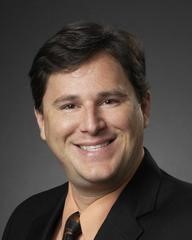 Bio: Scott Gorin is an Associate Fellow & Principal Systems Engineer at Lockheed Martin with almost 30 years of developing and demonstrating hypersonic technologies through flight-testing complex systems. While leading hypersonic research and development efforts focusing on next generation technologies for materials, sensors, and avionics, he established common architectures and integrated flight sciences analysis flows for multiple flight test configurations. Scott continues to develop in-house hypersonics critical skills training materials to facilitate knowledge transfer and reduce necessary comprehension ramp up time. Mr. Gorin also manages and maintains a conceptual idea and innovation development maker lab at Lockheed Martin for its employees.
Abstract: Overview of Systems Engineering Integration across the product life cycle as design and analysis efforts address customer needs and objectives throughout a Hypersonics system development