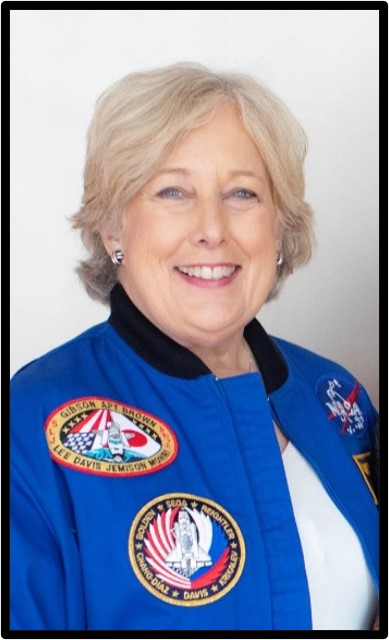
Jan Davis
NASA Astronaut, STS-47, STS-60, STS-85
Tuesday Night Banquet Dinner
Dr. Jan Davis is currently working part-time for Bastion Technologies, Inc. after serving as its Program Manager for the Safety and Mission Assurance contract at the National Aeronautics and Space Administration’s (NASA) Marshall Space Flight Center (MSFC) in Huntsville, Alabama. Prior to that, she worked as a Vice President and Deputy General Manager for Jacobs. Jacobs provides engineering, scientific, and technical support for projects and programs at Marshall.
Dr. Davis began her NASA career at Marshall in 1979 as an aerospace engineer and supported major NASA programs and projects, including the Hubble Space Telescope and the Chandra X-ray Observatory. After the Challenger accident, she became a team lead and lead engineer for the redesign of the Shuttle Solid Rocket Booster External Tank Attach ring.
In 1987, Dr. Davis was selected to join the Astronaut corps at the Johnson Space Center in Houston, Texas. She spent more than 670 hours in space as a mission specialist over the course of her three Space Shuttle flights: STS-47 (1992), STS-60 (1994), and STS-85 (1997). During these flights, she orbited the Earth 445 times. In 1998, she became the Director of the Human Exploration and Development of Space Independent Assurance Office for NASA Headquarters. Dr. Davis returned to MSFC and served as the Director of the Flight Projects Directorate at the Marshall Center until August 2003. Prior to retiring from NASA in 2005, Dr. Davis was the Director of Safety and Mission Assurance at MSFC leading up to the successful Return to Flight of the Space Shuttle in 2005.
Dr. Davis did her graduate research work in mechanical engineering at the University of Alabama in Huntsville and is a 1971 graduate of Huntsville High School. She also has degrees from the Georgia Institute of Technology and Auburn University in biomedical engineering and mechanical engineering, respectively.
She was elected to the Alabama Aviation Hall of Fame and the Alabama Engineering Hall of Fame. In 2002, she was given the Presidential Rank of Meritorious Executive, and she has received NASA’s Exceptional Service Medal, Space Medals, and Outstanding Leadership Medal. In 2012, she received Auburn University’s Lifetime Achievement Award and in May 2013, she received the Christine Richard Girl Scouts Lifetime Achievement Award. She has also received the WEDC Women Honoring Women and was named in 2015 as one of the Women Who Shape Alabama. Auburn University named her as a Distinguished Engineer in 2017.
Having served on many non-profit boards, she is currently on the board of the National Museum of the Mighty Eighth Air Force. She was also one of the founders of the nonprofit organization AstraFemina for STEM outreach for girls. Recently, she authored two books Air Born about her father, a WWII B-17 pilot and POW, and herself. Her husband is retired Alabama 23rd Judicial Circuit District Judge Dick Richardson and they have two grown children and four grandchildren.
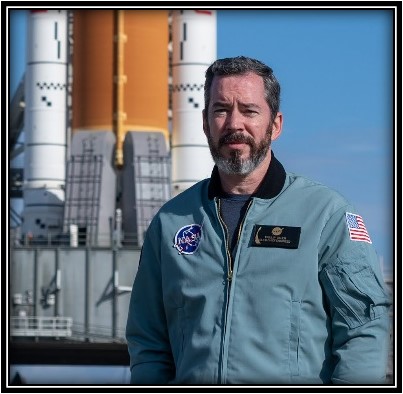
Phillip Allen
SLS Program Deputy Chief Engineer
Monday 8:30am
Dr. Phillip Allen is a husband, father, and the Program Deputy Chief Engineer for NASA’s SLS (Space Launch System) Program, managed at NASA’s Marshall Space Flight Center in Huntsville, Alabama. Alongside the SLS Chief Engineer, as Deputy Chief Engineer for the SLS launch vehicle Dr. Allen directs the efforts of approximately 5,000 engineers across the country. His work entails critical technical decisions and technical integration, bringing together the rocket, Orion capsule and ground launch systems to ensure mission success from rollout to in-space capsule separation. On launch day The Chief Engineer and Dr. Allen lead hundreds of engineers, working in real-time to resolve challenges and ultimately give the “go” for launch readiness. In addition, he is the supervisor for all the NASA SLS Chief Engineers for each of the individual elements of SLS.
Dr. Allen attended Freed Hardeman University before finishing his undergraduate degree in Mechanical Engineering at the University of Memphis. He then earned a master’s degree and Ph.D. in mechanical engineering from Tennessee Technological University in Cookeville. He has worked for NASA’s Marshall Space Flight Center since 2003 holding positions of structural analyst, Assistant Division Chief for the Materials Analysis and Test Division, Deputy Chief Engineer for SLS Liquid Engines Office, Deputy Chief Engineer for SLS Stages Office, and now SLS Program Deputy Chief Engineer.
Notable awards include NASA Silver Snoopy Award, NASA Software of the Year Award, NASA Exceptional Engineering Achievement Medal, and the ASTM Award of Merit along with the title of ASTM Fellow.
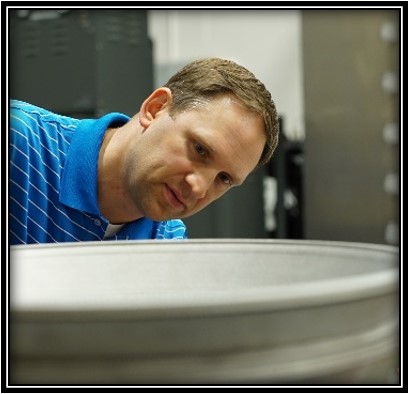
Dr. Paul Gradl
SME for Additive Manufacturing of Liquid Rocket Engines
Tuesday 8:30 am
Dr. Paul Gradl is a principal engineer and subject matter expert (SME) at the NASA Marshall Space Flight Center (MSFC) in Huntsville, Alabama. Dr. Gradl serves as a Principal Investigator and leads several projects for additive manufacturing of liquid rocket engine engines and has supported various development and flight programs over the last 22+ years. He authored and co-authored over 160+ journal articles, conference papers and book chapters; published a book titled “Metal Additive Manufacturing for Propulsion Applications,” in 2022; holds five patents and awarded NASA’s 2024 and 2025 ‘Patent of the Year’; and regularly teaches courses in additive manufacturing. Dr. Gradl is the recipient of numerous NASA and industry awards and medals; an Associate Fellow of the American Institute of Aeronautics and Astronautics (AIAA), a member of Society of Manufacturing Engineers, and serves on several additive manufacturing industry and government committees and as an advisor to industry. Gradl was named one of “The Most Influential Personalities of Additive Manufacturing in 2020” by 3Dnatives, recipient of “Engineer of the Year” by AIAA in 2022, received the SME Additive Industry Achievement Award in 2024, and received the 2025 ASTM Award for Additive Manufacturing Industrialization.
Paul has a BS in Mechanical Engineering, a MS in Business Administration from Gannon University, a MS in Systems Engineering from the University of Alabama in Huntsville, and Ph.D. in Aerospace Engineering from Delft University of Technology in the Netherlands.
Leonardo Barreda
Space Vehicle Systems Office Lead
Wednesday 8:30 am
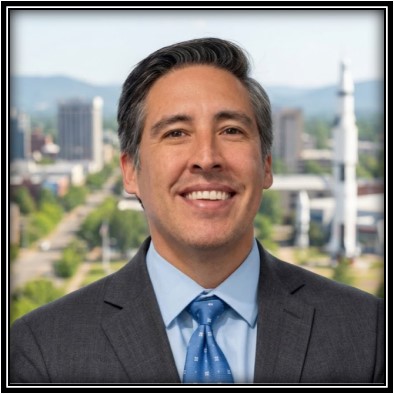
Leonardo Barreda leads the Space Vehicle Systems (SVS) Office within the Human Landing System (HLS) Program at NASA’s Marshall Space Flight Center in Huntsville, Alabama. In this technical project management role, he guides high‑impact engineering efforts and oversees multidisciplinary teams developing mission‑critical systems that advance NASA’s strategic goals for lunar exploration.
Raised in the border communities of El Paso, Texas, and Ciudad Juárez, Mexico, Mr. Barreda earned a B.S. in Mechanical Engineering from the University of Texas at El Paso. He began his NASA career in the Propulsion Systems Department at Marshall, performing structural analysis on solid rocket motors, liquid propulsion systems, including lander structures.
After eight years specializing in propulsion structural analysis, Mr. Barreda transitioned into lead roles in systems engineering, supporting interface development and flight evaluation planning for NASA’s Space Launch System (SLS). He led the integration and qualification of the Core Stage Thrust Vector Control (TVC) system for Artemis I, ensuring readiness for the program’s first launch.
Mr. Barreda now draws on his deep foundation in propulsion analysis, hardware integration, and systems engineering leadership to direct the HLS SVS team. His current focus is on certifying the HLS landers that will support NASA’s return to the lunar surface.
Dr. Kurt Polzin
Capability Manager for Advanced Propulsion
Thursday 8:30 am
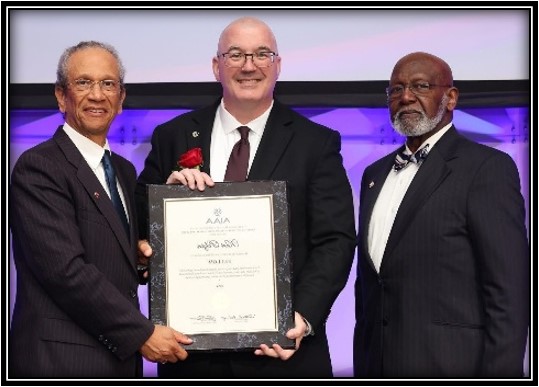
Dr. Kurt Polzin is a senior aerospace engineer and technical leader with more than 20 years of experience in advanced space propulsion, spacecraft systems, and aerospace technology development. He is from the George C. Marshall Space Flight Center and currently serves as NASA’s Capability Manager for Advanced Propulsion within the Space Transportation Program, where he leads technology development activities spanning electric propulsion, green propellants, solar sails, and other advanced propulsion technologies. Previously, he served for five years as Chief Engineer for NASA’s Space Nuclear Propulsion portfolio as the engineering technical authority, leading multidisciplinary teams developing nuclear thermal and nuclear electric propulsion technologies.
His technical expertise includes propulsion system design and analysis, plasma and fluid dynamics, thermal systems, spacecraft power, and experimental methods. Dr. Polzin holds a Ph.D. in Mechanical and Aerospace Engineering from Princeton University and is an AIAA Fellow.